How to photograph a solar eclipse with a phone
Put a proper solar filter over your phone lens for the partial phases and take it off only during totality. Then shoot wide: the darkening sky and the people around you make better phone pictures than a tiny Sun.
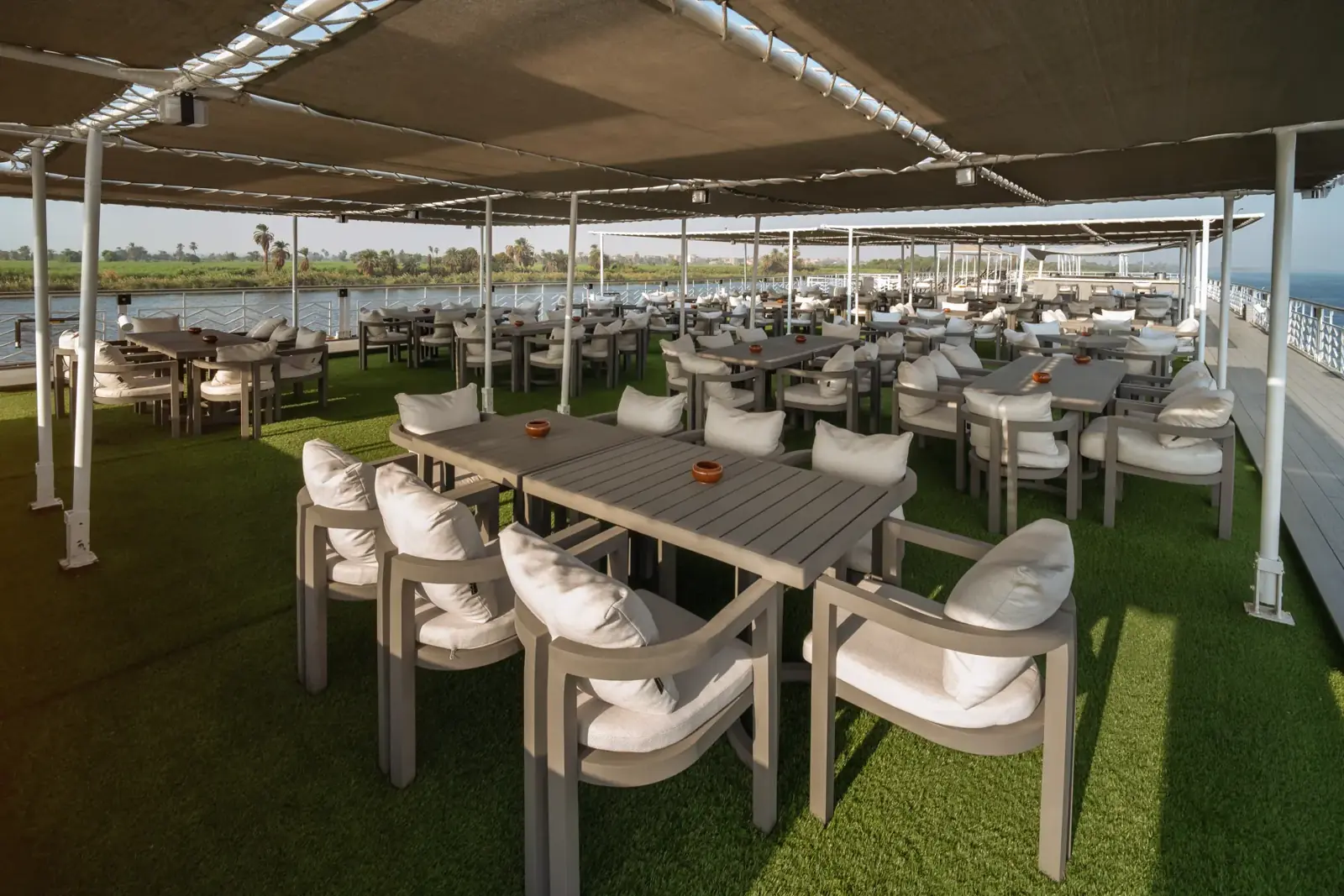
How to photograph a solar eclipse with a phone: cover the camera lens with a special-purpose solar filter during every partial phase, remove it only when totality begins, and put it back the moment the bright Sun returns. That rule comes from the American Astronomical Society (AAS), which says solar filters must stay on cameras during the partial phases and that only totality is safe without them. In Luxor on 2 August 2027, totality runs from 13:02:05 to 13:08:27 local time.
First, decide how much to shoot
The AAS says most experienced eclipse chasers advise first-timers to watch, not photograph, and to enjoy other people's pictures afterward. It also admits that almost any exposure with almost any camera, a phone included, will capture something of totality. A good compromise: set up before the eclipse, let the phone record video, and spend the six minutes looking up.
The filter rule
- Partial phases: filter on. The AAS says to put a solar filter over the camera lens before pointing it at the Sun at any time other than totality.
- Totality: filter off. With it on, the AAS notes, your totality pictures will come out blank.
- Sun returns: filter back on straight away.
The AAS lists solar filters made for smartphones, held over the lens with Velcro or other fasteners. A filter should fit snugly over the front of the lens but come off quickly at the start of totality. Read how to check eclipse glasses before you buy anything.
What a phone does well
A phone has a wide lens, so the Sun will look small in the frame. The AAS suggests phones and point-and-shoot cameras for scenes rather than close-ups:
- The progress of the partial phases, through a solar filter.
- The landscape as the light drops in the last minutes before totality.
- The 360° glow along the horizon during totality.
- Totality itself, as part of a wider picture of the sky.
- Video with sound. The AAS says many eclipse veterans think the audio is the best part of a totality video.
Settings and setup
- Practice at home. The AAS recommends shooting the ordinary Sun with your filter in the days or weeks before, so you know what works.
- Use a tripod or clamp. The AAS says a solid tripod is especially useful during totality, when exposures are longer. In Luxor the Sun is about 82° high at maximum, so choose a mount that tilts almost straight up.
- Set exposure yourself if your camera app allows it. The AAS advises presetting your settings rather than letting the camera change them automatically.
- Turn off the flash. It does nothing for the sky.
- Charge everything. The AAS advises fully charged batteries and a charged spare.
- Start video early. Begin a minute or two before 13:02 so you catch the last moments before totality and the reactions around you.
What to shoot, and when, in Luxor
| Local time, 2 August 2027 | Phase | Phone |
|---|---|---|
| 11:40:15 | Partial eclipse begins | Filter on; a frame every few minutes |
| Before 13:02 | Light fades | Filter on for the Sun; wide shots of the deck and the river |
| 13:02:05 to 13:08:27 | Totality | Filter off; video and wide shots of the sky |
| 13:08:27 to 14:26:34 | Partial eclipse | Filter back on |
Common mistakes
- Pointing the phone at the partial Sun without a filter.
- Leaving the filter on during totality, which gives blank pictures.
- Forgetting to put the filter back on when the bright Sun returns.
- Trying a new app or setting for the first time on eclipse day instead of practicing beforehand.
Do not forget to look
Six minutes and 22 seconds sounds long, but it passes fast. Look for the details NASA describes: Baily's beads, the diamond ring, the pink edge of the chromosphere and the white corona. Read what you see during totality before the day, so you know what to watch for.
Shooting from a Nile cruise
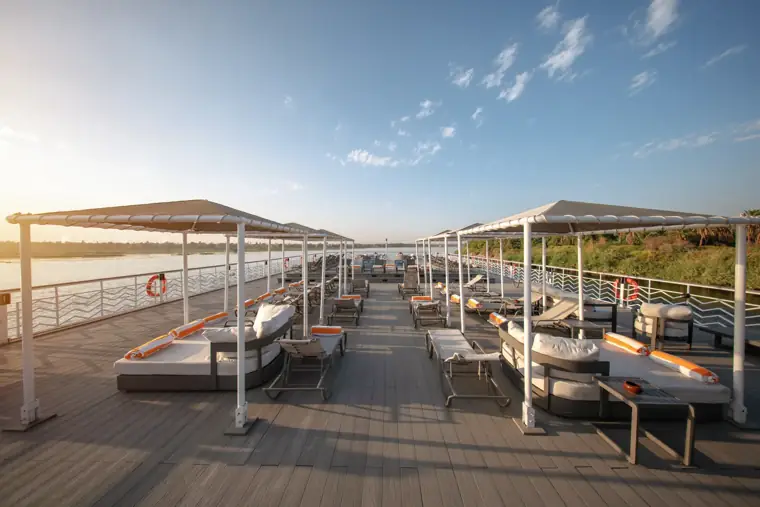
Our tours watch from the open sundeck of the Amada Nile cruise in Luxor, where the high Sun leaves little in the way. Set up early and keep your tripod low and steady. More about the boat is on the Nile cruise eclipse page, the city and timings on the Luxor eclipse guide, and the full safety rules for cameras, binoculars and telescopes on watching and photographing the eclipse safely.
Sources: AAS, How to Shoot Solar-Eclipse Images and Videos; AAS, Suppliers of Safe Solar Viewers and Filters; AAS, Solar Filters for Optics; NASA, Eclipse Viewing Safety; NASA, 2024 Total Eclipse: What to Expect; timeanddate.com, Luxor eclipse 2 August 2027.
Questions
Can I take a picture of a solar eclipse with my phone?
Will photographing the eclipse damage my phone?
Should I take the filter off during totality?
Keep reading
How to View a Solar Eclipse Without Glasses: 5 Safe Ways
You can watch the partial phases of a solar eclipse without glasses by projecting the Sun, never by looking at it. The only time you may look…
Read →
Eclipse Glasses: How to Check They Meet ISO 12312-2
Safe eclipse glasses meet the ISO 12312-2 international standard and come from a manufacturer that has had them tested by an accredited lab. A logo…
Read →
2026 vs 2027 Solar Eclipse: Which Is Better?
The total solar eclipse of 2 August 2027 is the better one by almost every measure: nearly three times longer than the 12 August 2026 eclipse, with…
Read →Ask for availability
Tell us your dates and how many are travelling. Nut Travel's eclipse team replies by e-mail or WhatsApp.



Maria, Assem, Nouran or another planner in our Cairo team replies to your request.