What happens during a total solar eclipse
As the Moon covers the last of the Sun, beads of light flicker at its edge, a single diamond flashes, and then the corona appears around a black disk. The sky darkens, the air cools and the horizon glows all around you.

What happens during a total solar eclipse is a sequence of distinct stages, and NASA lists them in order: a long partial phase, shadow bands, Baily's beads, the diamond ring, totality with the corona, and then the same steps in reverse. During totality the sky turns dark as dawn or dusk, the temperature drops and the horizon glows like a sunset in every direction. In Luxor on 2 August 2027, totality lasts 6 minutes 22 seconds, from 13:02:05 to 13:08:27 local time.
The stages in Luxor, 2 August 2027
| Stage | Local time | Eyes |
|---|---|---|
| Partial eclipse begins (first contact) | 11:40:15 | Eclipse glasses |
| Shadow bands, Baily's beads, diamond ring | Just before 13:02:05 | Eclipse glasses |
| Totality begins (second contact) | 13:02:05 | Naked eye |
| Maximum eclipse | 13:05:16 | Naked eye |
| Totality ends | 13:08:27 | Glasses back on just before |
| Partial eclipse ends | 14:26:34 | Eclipse glasses |
Times from timeanddate.com for Luxor. See the date, time and duration page for other places.
1. The partial eclipse
The Moon starts to cover the Sun, which turns into a slowly shrinking crescent. NASA calls the first touch "first contact." In Luxor this phase lasts from 11:40:15 until totality at 13:02:05, a little over 80 minutes. You must wear eclipse glasses or use projection the whole time; see safe ways to watch without glasses.
2. The light changes
In the final minutes the daylight becomes strange and dim, even though a sliver of Sun is still blazing. This is when you notice the temperature start to fall.
3. Shadow bands
Just before and after totality, NASA says you may see shadow bands: fast-moving, long, dark bands with white spaces between them, rippling across the ground or the sides of buildings. They come from turbulence in Earth's atmosphere, the same effect that makes stars twinkle. They are often faint and hard to photograph; a white surface, such as a sheet of paper on a deck, makes them easier to spot.
4. Baily's beads
As the Moon makes its final move over the Sun, several points of light shine around its edge. NASA explains that these are rays of sunlight streaming through valleys along the Moon's horizon. They last only a moment, and not everyone notices them.
5. The diamond ring
The beads disappear one by one until a single bright spot remains, set against the first glow of the Sun's atmosphere. It looks like a diamond on a ring. NASA's advice: totality is almost here, but keep your glasses on until the diamond is gone.
6. Totality
When the diamond ring vanishes and there is no direct sunlight left, NASA says you may take off your eclipse glasses and look with the naked eye. This moment is called second contact. What you may see:
- The corona: the Sun's outer atmosphere, streams of white light around the black disk of the Moon. It is normally hidden by the Sun's glare.
- The chromosphere: a thin pink circle around the Moon's edge.
- Prominences: pink features rising from the edge of the eclipsed Sun.
- A 360° sunset: a glow of twilight colors along the whole horizon.
- Bright stars and planets in the darkened sky.
- A temperature drop, and often an eerie silence.
NASA also suggests a glance at the people around you: many have a deep emotional response when totality begins. Thanks to Luxor's long totality, there is time to take it all in. Because the Sun is about 82° high, you will be looking almost straight up.
7. The reverse
Near the end of totality, brightening appears on the opposite side of the Moon from where the first diamond ring shone. NASA says this is your signal to stop looking directly: put your glasses back on before the first flash of sunlight. This moment is called third contact. Then the beginning plays in reverse: a diamond ring, Baily's beads and shadow bands again, followed by the partial phase until 14:26:34, when the Moon leaves the Sun's disk (fourth contact).
Why location matters
NASA says you must be inside the path of totality to see all of these stages. Outside it you get only a partial eclipse, the Sun is never fully covered, and you need eye protection throughout. Luxor is inside the path; read the Luxor eclipse guide for why the city was our choice.
Want to record it? Read how to photograph a solar eclipse with a phone. Our four eclipse tours watch totality from the sundeck of the Amada Nile cruise in Luxor.
Sources: NASA, 2024 Total Eclipse: What to Expect; NASA, Types of Solar Eclipses; NASA, Eclipse Viewing Safety; timeanddate.com, Luxor eclipse 2 August 2027.
Questions
How long does totality last in Luxor?
Does it get dark during a total solar eclipse?
When can I take my eclipse glasses off?
Keep reading

Aswan Eclipse 2027: Why 99.6% Is Not a Total Eclipse
Aswan gets a partial eclipse of magnitude 0.996 on 2 August 2027 and Abu Simbel 0.924: close, but neither is a total eclipse.
Read →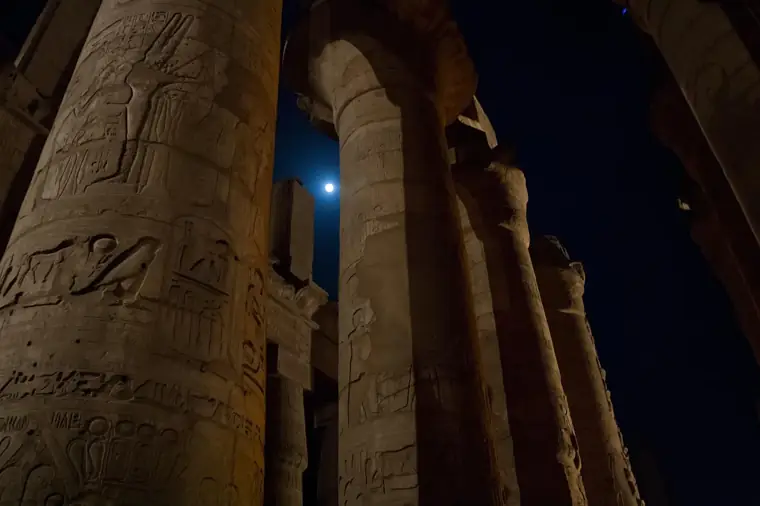
2026 vs 2027 Solar Eclipse: Which Is Better?
The total solar eclipse of 2 August 2027 is the better one by almost every measure: nearly three times longer than the 12 August 2026 eclipse, with…
Read →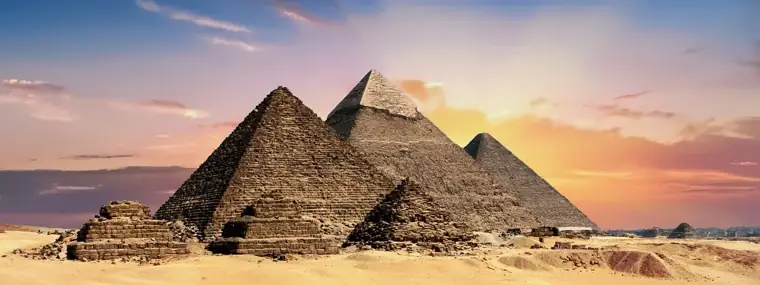
Solar Eclipse 2027 Cairo: Partial Only, So Travel South
Cairo and the Pyramids of Giza see a partial eclipse on 2 August 2027, not a total one, so to see totality you need to travel south to Luxor.
Read →Ask for availability
Tell us your dates and how many are travelling. Nut Travel's eclipse team replies by e-mail or WhatsApp.



Maria, Assem, Nouran or another planner in our Cairo team replies to your request.